
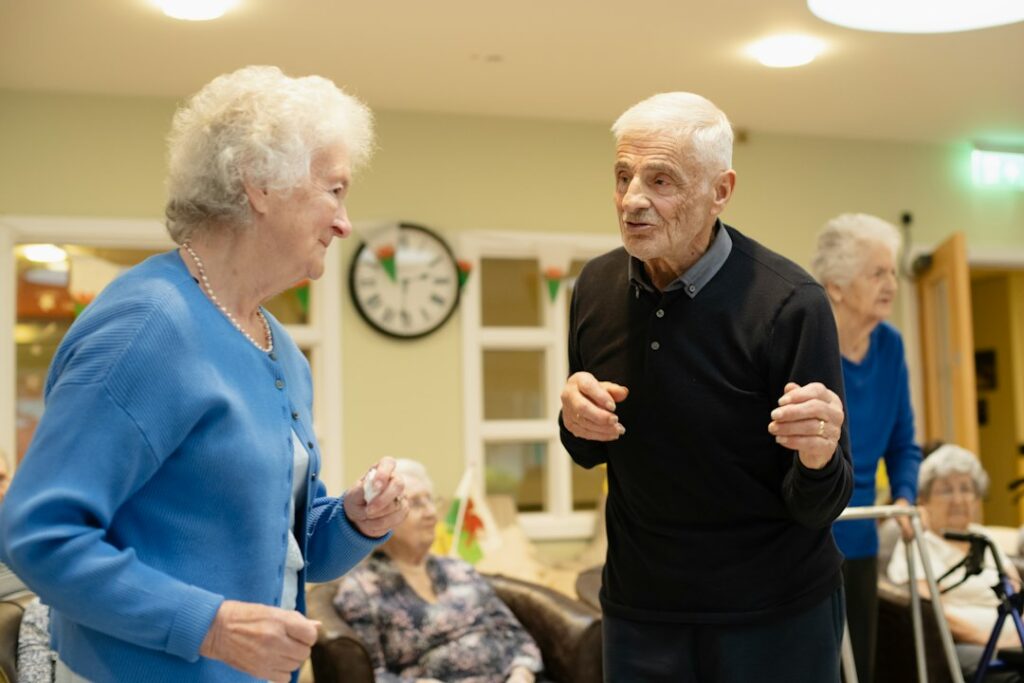
What role does assisted living play in senior mobility?
Assisted living can support mobility by combining a safer living environment, regular movement opportunities, help with daily tasks, and access to appropriate health care. The goal is not simply to help an older adult walk farther. It is to preserve strength, balance, confidence, and independence as safely as possible.
Mobility includes more than walking. It also involves:
- Moving from a bed to a chair
- Standing up from a seated position
- Walking to meals or activities
- Using a walker or wheelchair safely
- Managing stairs, thresholds, and uneven surfaces
- Completing personal care without unnecessary strain
- Getting outdoors and participating in community life
A well-designed assisted living setting can make these everyday movements more manageable while reducing hazards that may lead to falls or avoidable loss of function.
How does the living environment encourage movement?
The physical layout of assisted living often makes routine activity easier and more predictable. Clear hallways, good lighting, handrails, accessible bathrooms, and thoughtfully placed furniture can help residents move with fewer obstacles.
Some residences use features such as:
- Non-slip flooring
- Grab bars near toilets and showers
- Step-free entrances
- Elevators or single-level living areas
- Resting places along longer corridors
- Adequate space for walkers and wheelchairs
- Emergency response systems
These features do not eliminate every risk, but they can reduce the need to navigate clutter, steep steps, poor lighting, or unfamiliar spaces. A safer environment may also make residents more willing to move independently instead of remaining seated because they feel unsure or afraid.
Seasonal conditions can also affect mobility. In Crafton, PA, winter temperatures, ice, wet pavement, and reduced daylight may make outdoor walking more difficult. Assisted living communities may provide indoor walking routes, supervised outings, or activity areas that allow residents to remain active when outdoor surfaces are unsafe.
Do assisted living communities provide exercise or mobility activities?
Many assisted living communities offer structured activities designed to support strength, flexibility, balance, and endurance. Programs vary, but common examples include seated exercise, stretching, walking groups, balance practice, light resistance movements, and range-of-motion activities.
These activities may help residents:
- Maintain leg and core strength
- Improve posture and flexibility
- Practice standing and sitting safely
- Build confidence with walking
- Reduce stiffness from prolonged sitting
- Continue using familiar movement patterns
Exercise should be adjusted to a resident’s health, stamina, pain level, and mobility equipment. A person recovering from illness or living with arthritis may need a different activity plan than someone who walks independently.
Movement does not always look like a formal workout. Walking to a dining area, standing during portions of an activity, folding laundry, gardening in a raised planter, or participating in music and recreation can all add useful activity throughout the day.
How can staff assistance preserve independence?
Appropriate assistance can help residents remain active without requiring them to complete unsafe tasks alone. Staff may provide reminders, standby support, or hands-on help depending on a person’s needs.
For example, a resident might be able to walk independently but need assistance with:
- Getting up after a long period of sitting
- Navigating a crowded area
- Using a shower safely
- Carrying personal items
- Managing fatigue later in the day
- Moving from a chair to a walker
The purpose of assistance should be to support the resident’s abilities, not replace them unnecessarily. If staff perform every task that a resident can safely do, strength and confidence may gradually decline. If a resident is left without enough support, the risk of falls or injury may increase.
A useful care approach identifies what the resident can do, what requires supervision, and what requires direct help. These needs may change after a hospitalization, medication adjustment, illness, or fall.
What is the connection between mobility and fall prevention?
Mobility support and fall prevention are closely connected. Residents who avoid walking because of fear may lose strength and balance over time. Residents who move without recognizing their limits may face preventable hazards.
Fall prevention may include:
- Reviewing walking routes for clutter and poor lighting
- Encouraging proper footwear
- Keeping mobility aids within reach
- Teaching safe transfers
- Allowing enough time to reach the bathroom or dining area
- Monitoring dizziness, weakness, or unusual fatigue
- Reviewing changes in walking ability
- Using mobility equipment correctly

A walker or cane can improve safety only when it is properly fitted and used consistently. A mobility aid that is too tall, too low, damaged, or used incorrectly may create additional risk.
Falls can also be related to vision changes, dehydration, low blood pressure, medication effects, or illness. A noticeable change in balance or walking should not be dismissed as a normal part of aging.
Can assisted living help after a decline in mobility?
Assisted living may provide a supportive setting after a resident experiences a decline, but recovery depends on the cause and severity of the problem. A person who becomes weaker after bed rest may regain some function through gradual activity. Someone with a progressive neurological condition may need ongoing adaptation rather than a return to previous abilities.
Changes that deserve prompt attention include:
- New difficulty standing
- Increased dependence on furniture while walking
- Frequent near-falls
- A sudden change in gait
- New confusion during transfers
- Pain that limits movement
- Repeatedly refusing to leave the room
- Needing more help with dressing or toileting
A health care professional may evaluate whether therapy, medication review, equipment changes, or additional supervision is appropriate. Assisted living staff can often observe day-to-day changes that may not be obvious during an occasional visit from family.
How can families support mobility without creating pressure?
Families can help by encouraging regular movement while respecting fatigue, pain, and personal preferences. The most useful conversations focus on abilities and routines rather than simply asking whether a person is “doing enough.”
Helpful questions may include:
- What activities feel comfortable and enjoyable?
- When during the day is energy usually highest?
- Is pain or fear limiting participation?
- Is the current walker, cane, or wheelchair still suitable?
- Does the resident need more time for transfers?
- Are there activities that encourage walking naturally?
Practical support might involve visiting during a time when the resident has energy, taking a short walk together, or joining an activity rather than insisting on exercise as a separate obligation. Encouragement should not become pressure, particularly when a resident is ill, dizzy, short of breath, or in pain.
What should residents and families look for in a mobility-supportive setting?
A mobility-supportive assisted living environment should be able to explain how it handles exercise, falls, transfers, mobility equipment, and changes in physical ability. Questions may include:
- Are walking or balance activities available?
- How are individual mobility needs documented?
- What happens after a fall or near-fall?
- Can residents use walkers or wheelchairs throughout common areas?
- Are indoor walking routes available during poor weather?
- How are bathrooms and bathing areas designed for safety?
- How are changes in strength, balance, or endurance communicated?
The strongest support usually combines safe design, regular movement, respectful assistance, careful observation, and timely medical follow-up. Mobility is more likely to be preserved when it is treated as part of everyday living rather than as a task limited to formal therapy sessions.
