
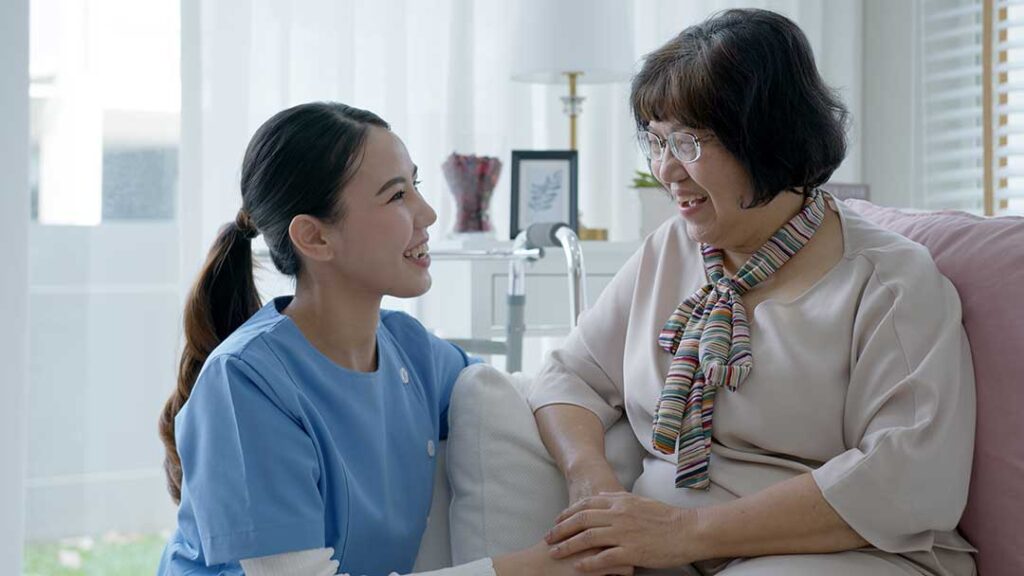
Intergenerational activities bring older adults and younger people together for shared experiences, conversation, learning, and creativity. In assisted living, these programs can support emotional well-being, mental stimulation, physical engagement, and a stronger sense of belonging.
For residents and families in Crafton, PA, intergenerational programming may be especially meaningful because it connects assisted living communities with nearby households, schools, youth groups, families, and civic life. The activities do not need to be elaborate. A regular visit, shared project, or conversation can provide benefits when it is planned around residents’ abilities, interests, and comfort.
What are intergenerational activities?
Intergenerational activities are organized experiences involving people from different age groups. In assisted living, they often include older adults and children, teenagers, young adults, or families.
Examples may include:
- Reading stories together
- Making seasonal crafts
- Sharing family recipes and food traditions
- Playing card games, board games, or simple movement games
- Recording oral histories
- Gardening in raised beds or indoor containers
- Singing, dancing, or listening to music
- Completing art, photography, or writing projects
- Celebrating birthdays, holidays, or community traditions
- Teaching practical skills such as sewing, knitting, handwriting, or basic technology
The most successful activities have a clear purpose but allow natural conversation. A project should not treat residents as passive recipients or younger participants as entertainers. Both groups should have opportunities to contribute.
How do these activities benefit older adults?
Intergenerational contact can reduce feelings of isolation and create regular opportunities for meaningful social interaction. A resident who has limited family nearby may appreciate having a familiar group of younger visitors to look forward to.
The benefits may include:
- More frequent conversation and social connection
- A greater sense of purpose and usefulness
- Opportunities to recall and share life experiences
- Mental stimulation through games, questions, and new topics
- Increased enjoyment and positive mood
- Motivation to participate in group activities
- A stronger connection to the surrounding community
Many older adults also enjoy being recognized for their knowledge. A resident may remember how to preserve food, repair clothing, grow plants, raise children, work with tools, or manage a household. Sharing those experiences can reinforce identity beyond a diagnosis, age, or level of care.
Intergenerational activities should not be viewed as a treatment for loneliness or depression. They can support social well-being, but residents who show persistent sadness, withdrawal, confusion, or loss of interest may need additional assessment and support.
Can younger people benefit too?
Yes. Intergenerational programs can help younger participants develop patience, listening skills, empathy, and a more realistic understanding of aging. Regular contact may also correct common stereotypes, such as the assumption that all older adults are frail, unfamiliar with technology, or unable to learn new things.
Children may enjoy hearing stories about earlier decades, learning a craft, or playing a game that does not involve a screen. Teenagers and young adults may gain confidence by leading a discussion, helping with a digital project, or assisting with a shared performance.
These experiences can also make conversations about aging, memory loss, disability, and end-of-life issues less abstract. The setting should remain respectful and age-appropriate, with guidance from adults who can explain differences in communication, mobility, and memory.
Which activities work best in assisted living?
Activities work best when they are flexible, familiar, and easy to adapt. A single project may need several participation levels so residents with different abilities can take part.
For example, a gardening activity might include:
- Choosing seeds or plants
- Filling containers with soil
- Watering with a lightweight cup
- Identifying scents and textures
- Decorating plant markers
- Talking about gardens from childhood
- Observing growth over several weeks
A resident who cannot stand or use both hands can still participate by selecting colors, giving instructions, smelling herbs, or sharing memories. This approach avoids making physical ability the measure of meaningful involvement.
Music is another adaptable option. Some residents may sing, while others tap along, request familiar songs, discuss memories connected to music, or listen quietly. Activities involving memory should never pressure residents to recall a specific answer. Open-ended prompts are usually more comfortable than quizzes.
How should activities be adapted for residents with dementia?
Residents living with dementia can benefit from intergenerational activities, but the structure may need to be simpler and more predictable. Short sessions, familiar materials, and calm surroundings are often easier to manage than crowded or noisy events.
Helpful practices include:
- Using one-step instructions
- Demonstrating rather than explaining only with words
- Limiting the number of participants
- Offering tactile materials such as fabric, large buttons, soft yarn, or safe gardening items
- Avoiding activities that depend on correct answers
- Allowing residents to observe without pressure
- Watching for signs of fatigue, distress, or overstimulation

Children should receive simple guidance before participating. They can be told that some residents may repeat questions, speak slowly, forget names, or communicate in different ways. The message should emphasize patience and respect rather than fear or pity.
What should families look for in a quality program?
A good intergenerational program is not measured by attendance alone. Families can consider whether residents appear comfortable, engaged, and respected during the activity.
Useful questions include:
- Are residents invited to choose or shape the activity?
- Can people participate without being physically active?
- Are group sizes and noise levels manageable?
- Are younger participants prepared for differences in communication?
- Is privacy protected when photographs, recordings, or stories are involved?
- Are activities accessible for residents using walkers, wheelchairs, hearing aids, or glasses?
- Is there a quiet alternative for someone who does not want to join?
- Are interactions based on mutual respect rather than charity?
Consent matters. Residents should be able to decline participation, leave early, or change their minds. Families may also want to understand how photographs, recordings, or personal stories will be handled.
How can programs fit local life in Crafton?
Seasonal and community-based activities can make intergenerational programming feel more natural. In a compact community with changing weather, indoor projects may be particularly useful during colder months, rainy periods, or days when walking conditions are uncomfortable.
Ideas include creating a shared seasonal display, exchanging handwritten cards, discussing local household traditions, or documenting how homes, transportation, schools, work, and celebrations have changed over time. Residents can contribute memories, while younger participants can add current perspectives and creative skills.
The goal is not to recreate the past or ask older adults to perform their life stories. It is to create genuine exchange. A short conversation about a favorite meal, a family tradition, or a meaningful object may be more valuable than a highly organized event.
What common mistakes should be avoided?
Intergenerational activities can become uncomfortable when they are designed around assumptions. Younger people should not be expected to entertain every resident, and residents should not be treated as teaching tools.
Common problems include:
- Making activities too long
- Using loud music or crowded rooms
- Requiring residents to remember facts
- Focusing only on children’s interests
- Ignoring sensory, mobility, or communication needs
- Presenting residents as helpless or inspirational simply because of age
- Continuing after participants show fatigue or discomfort
A respectful program gives each age group a meaningful role and allows relationships to develop gradually. Even a brief, consistent interaction can be more effective than an occasional large event.
